
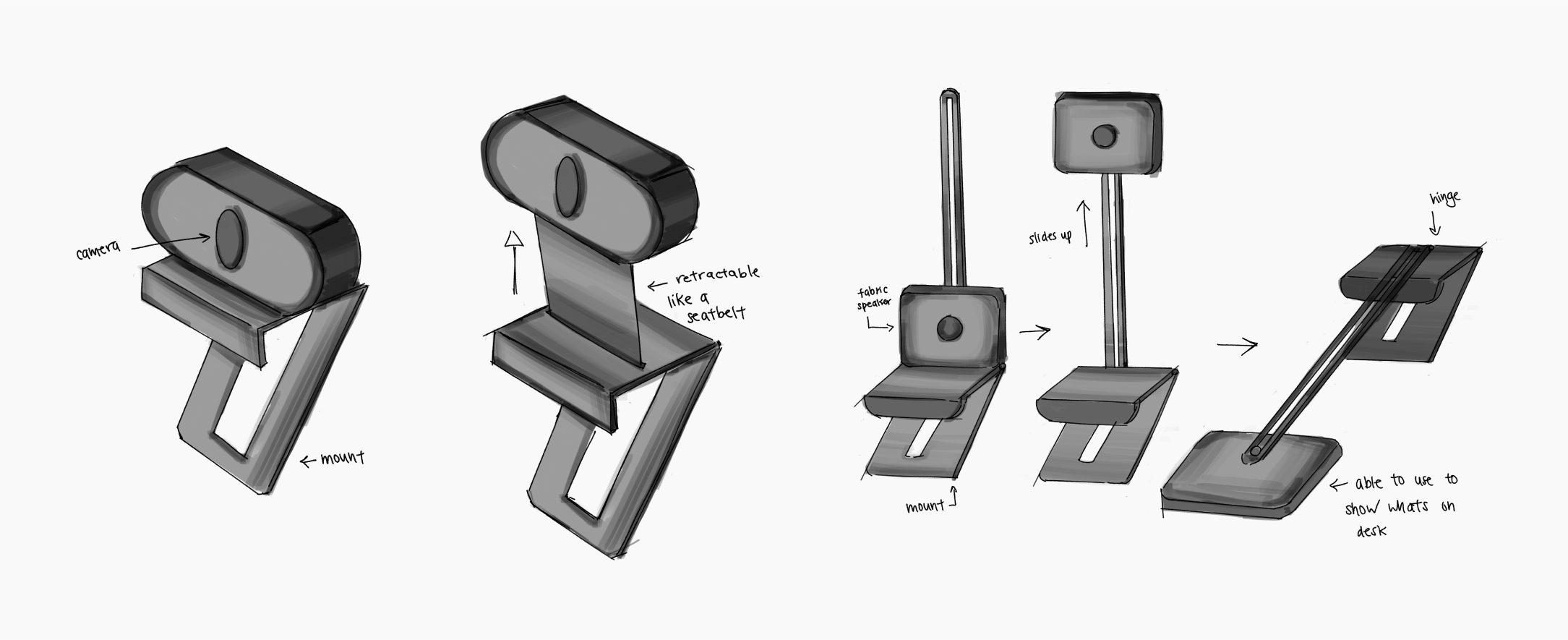
This week, we spent some time as a team defining our persona, and getting a headstart on a couple of sketches of our potential video camera form.
Persona
Nathan Andrews, 21
As graduate student pursuing his Masters in Interactives Arts and Technology, one of Nathan's frustrations was being limited in his ability to show his design process to his instructors, panel reviewers, students and others academic personnel through his tiny, non-movable laptop webcam.Concept 1
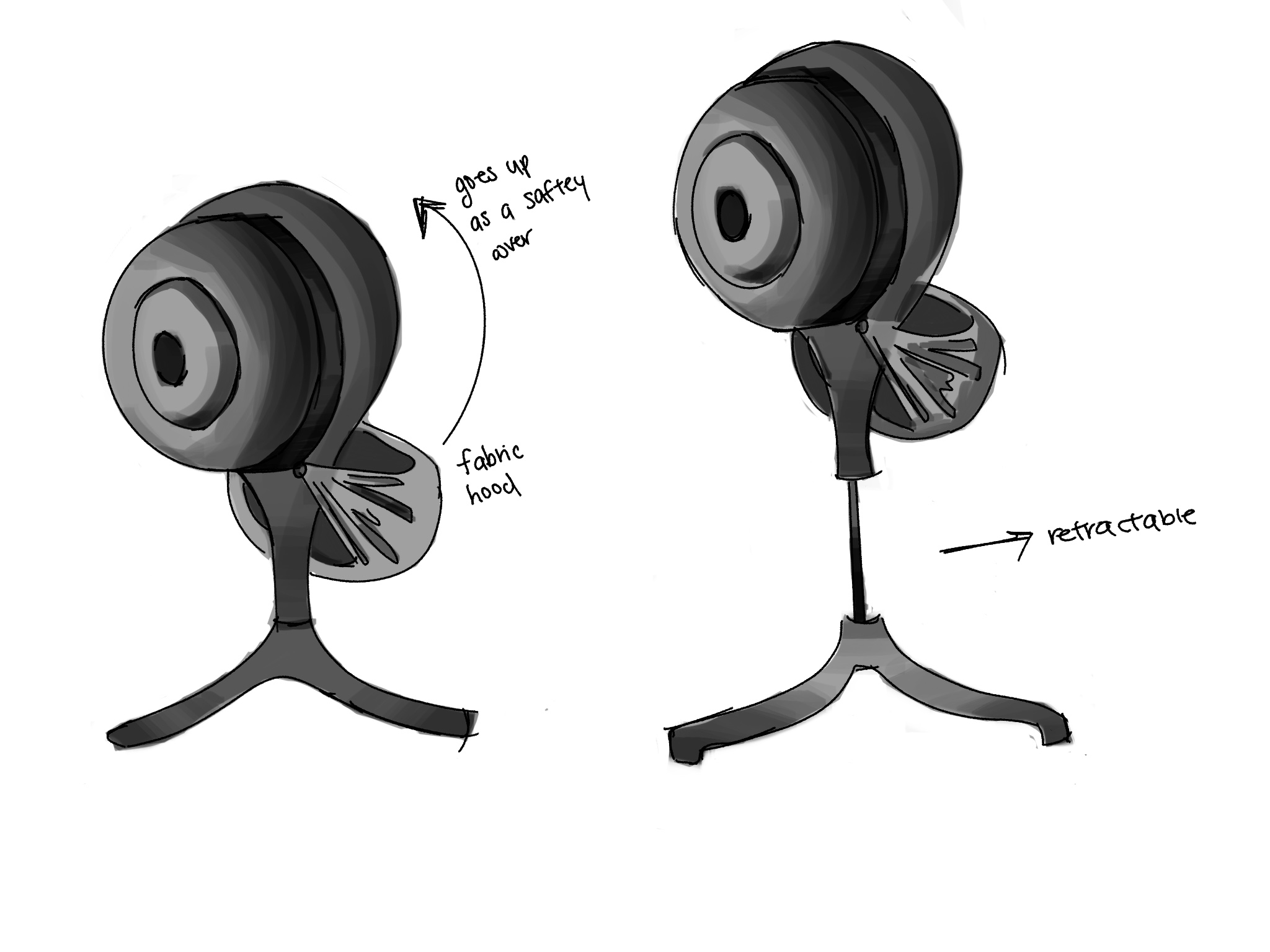
This webcam is meant to be placed on the user’s table, instead of mounted on their laptop or
monitor. Addressing the user’s need for a mobile webcam that they can pick up, the webcam can be
easily picked up and detached from its base. Incorporating the material of fabric, the webcam
includes a fabric hood that is used as a safety cover.
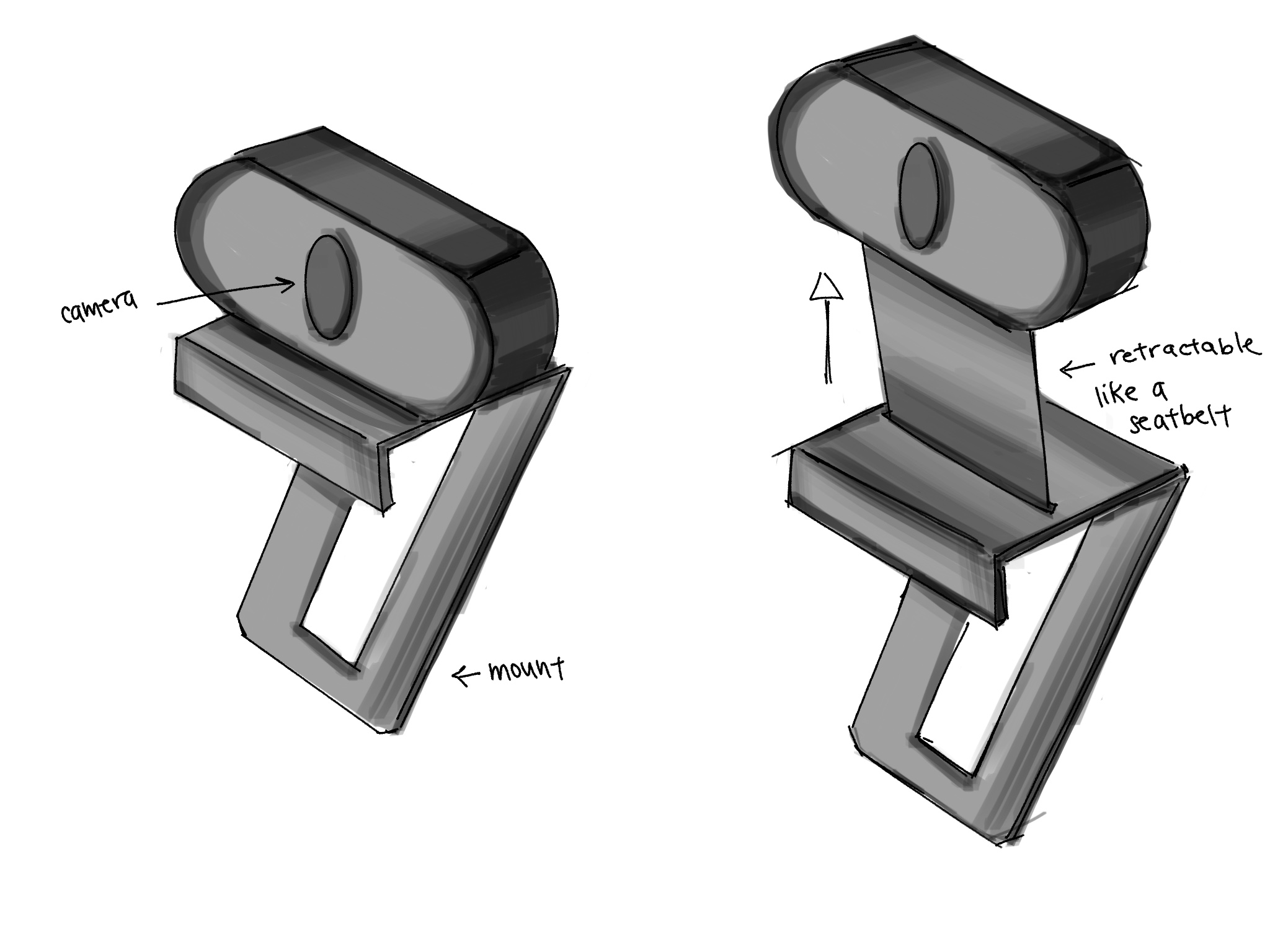
This webcam can be mounted on the user’s laptop or monitor. Similar to a seatbelt, the webcam
can be
detached from the base and easily retracted back to the base. This way, the user can easily pull
it
off the base and point it towards a different direction and location.
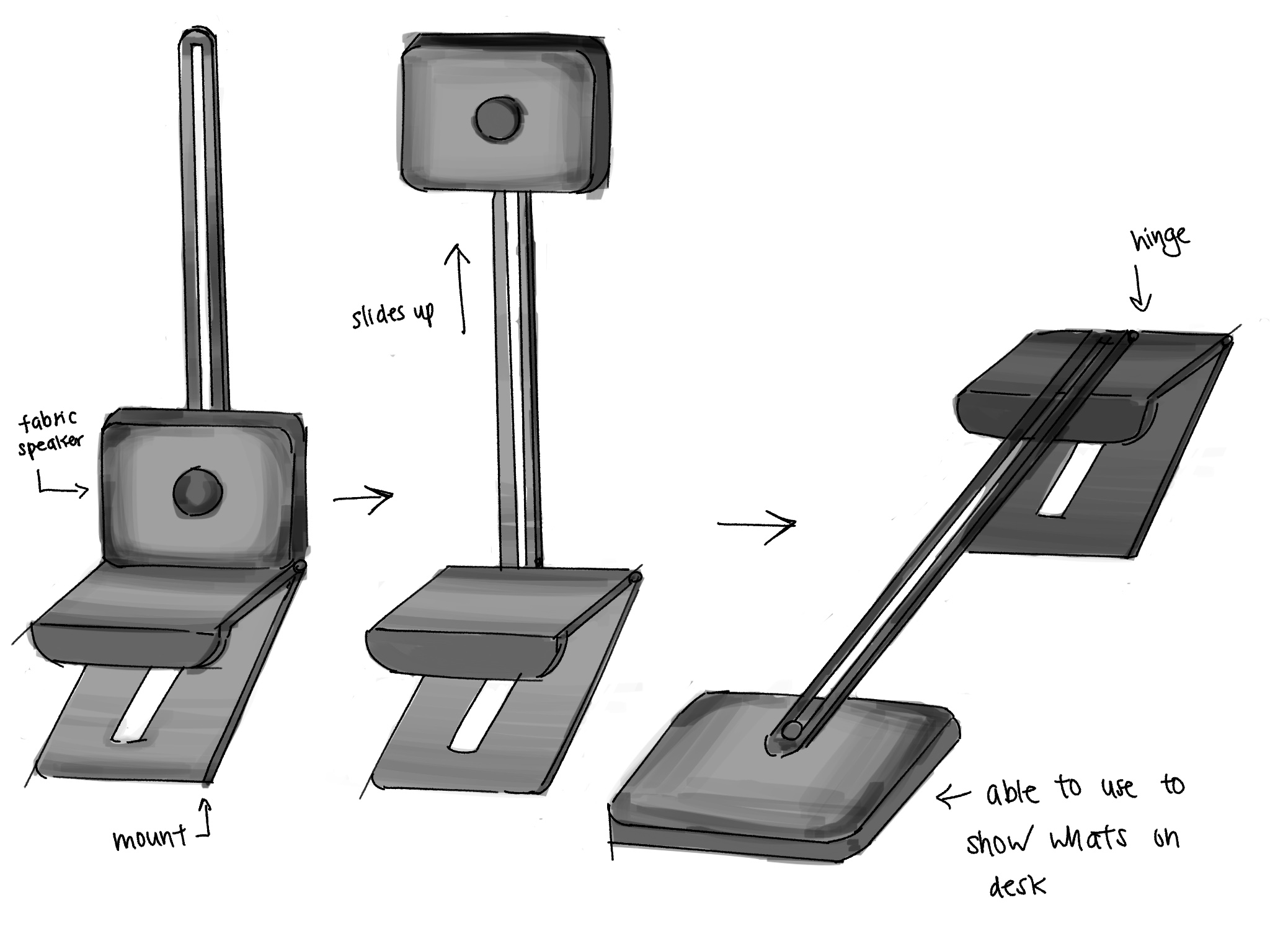
Again, this webcam includes a mount.This one allows the user to slide up the webcam in order to get a higher angle. It can also be tilted down, so that the user can show the objects and work on their table.
Concept 2
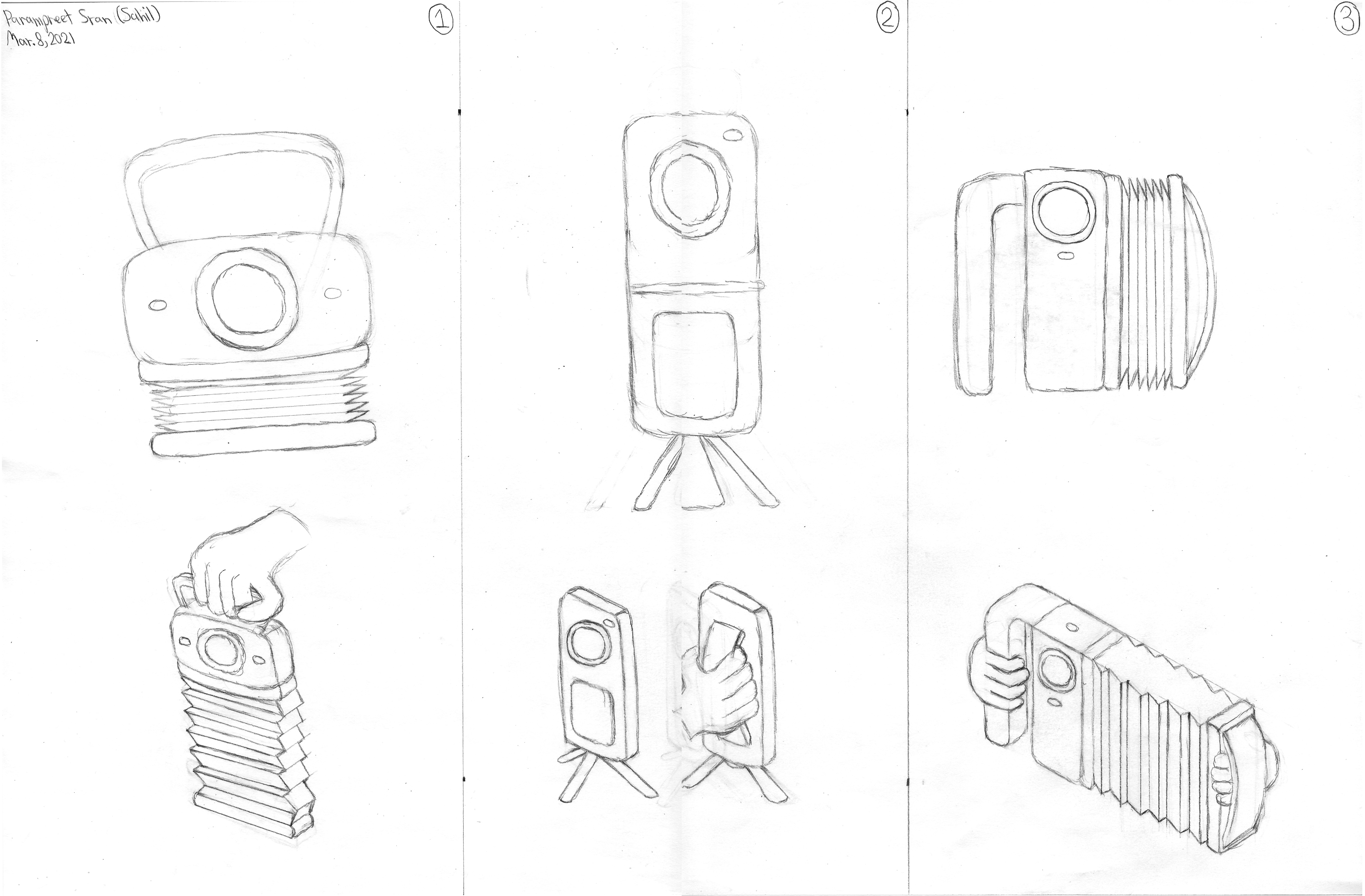
The left-most webcam iteration is inspired by Japanese paper lanterns, which expand in size when hung at an elevated height. The Vanitian Lantern inherits this concept by adopting a cloth retractable lantern to serve as a keylight for the webcam. The design is also functional when stationary on the user’s desk, as the light continues to illuminate the subject through the fabric.
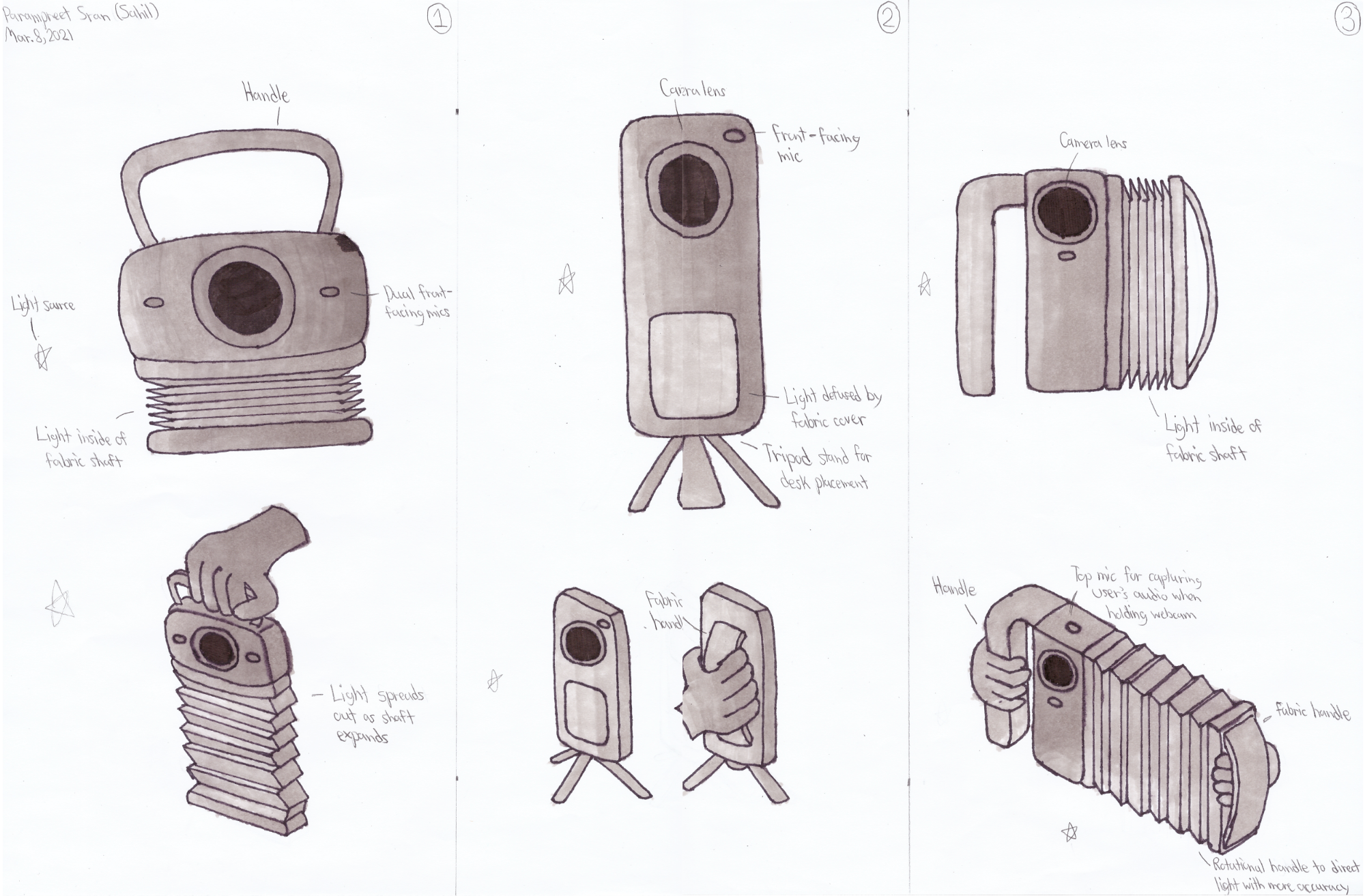
The Whip Video camera (middle) is a reimagination of a once popular video camera in the early 2000s known as Flip Video. This webcam features the same miniature form factor as the original Flip camera, except with a few design alterations to accommodate our persona. The camera features a diffused frontal light as well as a cloth handle, allowing it to be more portable.
The webcam on the right takes inspiration from the Accordion, a German instrument that projects sound by it’s continuous extend/retract motion. The Seeker’s Accordion repurposes the body to direct light in a specific direction. When held correctly, the user’s right hand controls the camera while the left hand directs the amount of light that emanates from the camera body. The webcam also features an additional top microphone to capture user dialogue whenever the camera is held.
Concept 3
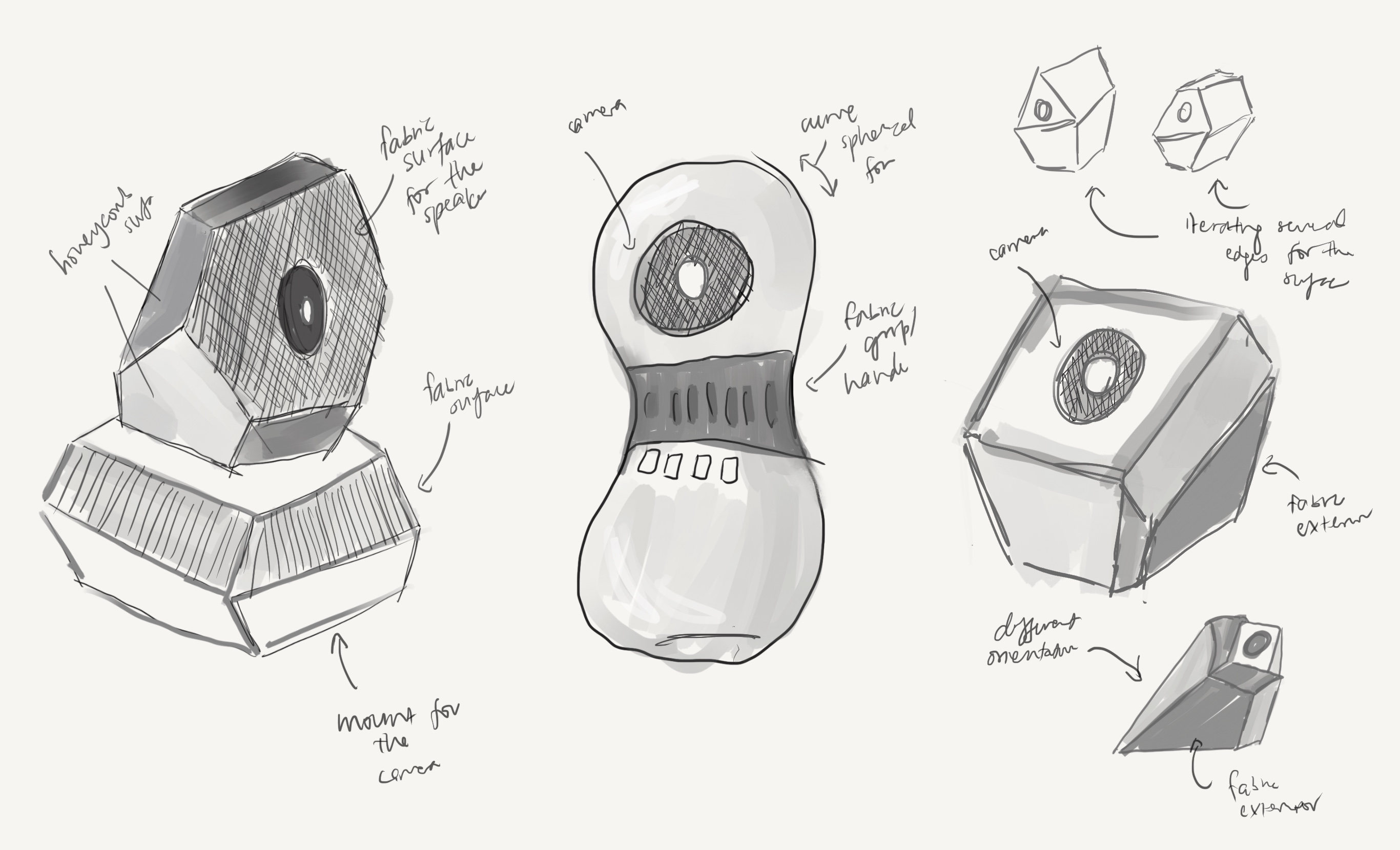
The first webcam showcases a honeycomb style webcam where the top honeycomb can be detached from the bottom mount. The mount helps to add some height to the webcam, and the honeycomb edges make it grippy and easy to mount and dismount depending on the user's choices.
The second webcam is a rounded webcam modelled around the idea of a dumbbell. The dumbbell metaphor was chosen because it immediately communicates that it is to be held, but also can be placed upright in a static manner. The smooth and curved shape can be 3D printed, and there could be a fabric material on the handle part (where the two spheres meet).
The third webcam is a modelled is a multi surface 'cube' where the webcam can be placed along multiple edges. This is imagined to have a fabric surface. The multiple surface form was chosen so that the webcam can be propped in multiple difference orientations, changing the angle view of the camera without needing a mount or a rotation piece.